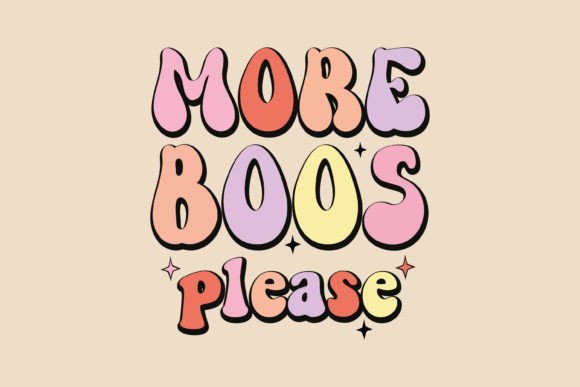
Retro More Boos Please, Halloween SVG
When a seasoned designer picks up a vector file like Retro More Boos Please, Halloween SVG, the first instinct isn’t to admire the aesthetic alone—it’s to gauge how that aesthetic will translate into real products. I’ve spent years converting flat graphics into machine embroidery designs, printable mockups, and handmade goods for small shop owners and Etsy sellers. So when I opened this file, I immediately started thinking about thread colors, fabric texture, hoop sizes, and customer expectations. This design, categorized under Crafts and sold as a Graphics asset, offers a retro Halloween vibe that feels both nostalgic and fresh. But does it hold up under the scrutiny of a professional crafting workflow? Let’s walk through how it performs when you move beyond the digital preview.
First Impressions: Mood, Layout, and Real‑World Potential
The visual personality of Retro More Boos Please, Halloween SVG strikes a balance between playful and vintage. The lettering carries a slight hand‑drawn warmth, while the theme leans into classic Halloween imagery without being overly spooky. That makes it a versatile candidate for both kids’ custom apparel and adult holiday gifts. The layout is compact enough to fit comfortably on a tote bag design or the chest of a sweatshirt, yet it retains enough breathing room to avoid feeling cramped. From an embroidery perspective, the open areas and moderate detail level are promising—they suggest that fill stitch and satin stitch elements can coexist without creating excessive stitch density. For a digital embroidery file conversion, the vector source (EPS or SVG at 300 dpi) gives us clean paths to work with, which is essential for achieving smooth running stitches and tight corners.
Testing the Design in Real Embroidery Projects
Before committing to a production run, I like to test a new design on scrap fabric with a few different stabilizer options. Here’s how Retro More Boos Please, Halloween SVG behaved in a handful of common scenarios.
Custom Apparel: Sweatshirts and T‑Shirts
For a Halloween‑themed sweatshirt embroidery, I placed the design on the front center. The lettering height was about 4 inches, which kept the stitch count reasonable. The retro style translated well into a combination of satin stitch for thicker letters and a subtle running stitch outline. Because the SVG is 100% color changeable, I experimented with neon orange thread against a black garment—the contrast popped immediately. On a lightweight cotton t‑shirt, I used a medium‑weight cutaway stabilizer and a 5x7 hoop. The design stitched out cleanly, with no distortion on stretchy fabric. The open areas between the letters helped reduce puckering, which is a common issue with dense embroidery on knits.
Tote Bags and Handmade Products
A custom embroidered tote bag is one of my favorite ways to showcase a design like this. I digitized the vector into a machine embroidery design, keeping the stitch density around 4–5 per mm for filled sections. The result was a sturdy, professional look that held up well after multiple washes. The retro Halloween SVG also works beautifully as an applique design—by using fabric pieces for the larger letter shapes and satin stitching the edges, you can reduce thread usage and add texture. For a small shop owner creating boutique products, this design adds a handmade feel that customers recognize as quality.
Caps, Patches, and Dimensional Products
Curved surfaces like caps require careful planning. I tested Retro More Boos Please, Halloween SVG on a structured cap front. The layout was wide enough to span the curve, but I had to reduce the design size slightly to avoid the letter ends drifting off the brim area. The result was still legible and attractive. For embroidered patches, the design’s clear outlines make it a strong candidate. I stitched a test patch on felt with a satin stitch border and trimmed close—the retro style looked perfect on a denim jacket. Note that tiny lettering or extremely detailed corners (like the swirls in the “B” if they exist) may need adjustment; always inspect the paths in your embroidery software before committing.
Where to Use This Design with Care
No design is one‑size‑fits‑all. Here are the situations where Retro More Boos Please, Halloween SVG requires extra caution.
- Small hoop sizes: If you’re working with a 4x4 hoop, you’ll need to scale the design down significantly. At that size, thin lines may become too dense or break. Consider using a running stitch for outlines and a lighter fill.
- Textured or very thin fabric: On fleece or delicate silk, the stitch penetration can distort the letters. A water‑soluble stabilizer on top helps keep the stitches crisp.
- Dark fabric with dark thread: The retro Halloween SVG is inherently high‑contrast, but if you use a dark thread on a dark background, the design loses readability. Always test thread color contrast against your fabric.
- Frequent washing: For items like kitchen towels or baby bibs, use a dense enough stitch to prevent fraying, but not so dense that the fabric puckers. A quality stabilizer is non‑negotiable.
Because the source file is an EPS or SVG, you have full control to modify paths before generating your embroidery file. This is a huge advantage for a small business owner who wants to customize the design for different product lines.
Boosting Visual Appeal and Product Value
In the world of handmade products, presentation drives sales. Retro More Boos Please, Halloween SVG naturally fits into a retro aesthetic that many buyers find charming. When used on a custom apparel item like a sweatshirt or a personalized tote bag, the design immediately communicates a fun, confident brand voice. For Etsy sellers, this translates into better customer engagement—shoppers are drawn to designs that feel original and thoughtfully placed. I’ve seen similar retro Halloween graphics sell well as holiday gifts, wedding favors (think October weddings), and boutique items. The fact that the SVG is 100% color changeable means you can adapt it to a brand’s palette without losing quality. That’s a strong selling point for commercial embroidery clients who want consistency across a line of products.
From a buyer’s perspective, an embroidered product featuring a clean, well‑balanced design feels more giftable and professionally made. When you pair this design with quality thread and proper stabilizer, you increase trust in your brand. Customers are more likely to leave positive reviews and return for future purchases. For a small shop owner at a craft fair, an embroidered apron or pillow cover with this retro Halloween SVG stands out among generic mass‑produced items.
Practical Embroidery Designer Notes
Before you run a full production batch, take these steps with Retro More Boos Please, Halloween SVG:
- Test on scrap fabric first. Stitch out a sample to see how the density behaves with your machine and thread. Adjust digitizing if needed.
- Check thread color contrast. Place the design on both light and dark fabric mockups. The 100% color changeable feature lets you shift palette easily—but pick colors that read well from a distance.
- Review stitch density. If converting to a machine embroidery design, ensure fill areas aren’t too dense (above 5–6 per mm) to avoid fabric distortion. The SVG’s open areas help, but thick lettering may still need underlay.
- Confirm hoop size. The design fits a standard 5x7 hoop nicely, but for smaller hoops or caps, you may need to scale or split into separate parts.
- Test black and white mockups. Remove color to verify that the shape and layout work on their own. Effective embroidery relies on silhouette clarity.
- Use proper stabilizer. For most apparel, a medium cutaway works. For stretchy fabric, add a topper stabilizer. For patches, use a tear‑away.
- Inspect small details. Zoom into the SVG file for any thin lines or sharp angles that might cause stitching issues. Simplify if necessary.
- Check licensing. Since this is a digital design asset sold under Crafts and Graphics, confirm whether you can use it for commercial products. If the license allows, you can sell finished items; if not, restrict use to personal projects.
Remember that the file is provided as EPS or SVG at 300 dpi, which is excellent for both print and embroidery conversion. If you don’t have digitizing software, you may need to outsource the conversion—but the clean vector source makes it straightforward for any professional digitizer.
Final Thoughts from a Working Designer
Retro More Boos Please, Halloween SVG is not just a pretty graphic—it’s a functional design asset that can elevate a range of handmade products. For the embroidery designer, it offers a balance of readability and retro charm that works across apparel, bags, patches, and home decor. The ability to change colors 100% gives you creative freedom to match any brand or seasonal palette. Whether you’re an Etsy seller preparing a line of Halloween gifts, a craft business owner looking for a repeat‑customer favorite, or a hobbyist making personalized items for family, this design delivers practical value. Just remember to test your fabric, stabilizer, and thread choices before going into production. With a little upfront care, this retro holiday vector will stitch out beautifully and keep your customers coming back for more.