Trying to Earn Brownie Points,Christmas: A Designer’s Real-Project Review
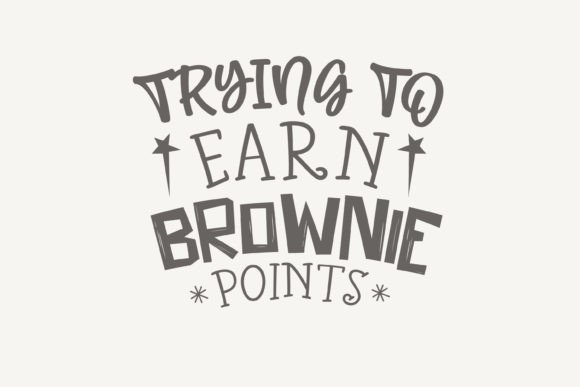
When I first opened the file for Trying to Earn Brownie Points,Christmas, I admit I chuckled at the name. It has that playful, slightly self-aware tone that works well for holiday projects aimed at gift-givers who want to show they tried. As someone who has reviewed hundreds of embroidery files and digital design assets, I’ve learned that the best seasonal designs do more than look pretty—they land emotionally. This one lands somewhere between cheeky and sincere, which is a surprisingly useful sweet spot for both personal and commercial embroidery work.
The file comes as an EPS and SVG, both at 300dpi, which immediately tells me this was built with flexibility in mind. The description promises easy color changes and full color editability, so it’s clearly positioned as a graphic for print-on-demand, mugs, posters, and T-shirts. But I want to talk about what happens when you take a design originally made for print and push it into the world of machine embroidery—because that’s where the real evaluation begins.
First Impressions: Mood, Shape, and Visual Personality
The design has a clean, modern silhouette with a friendly hand-drawn feel. It doesn’t scream for attention with dense ornamentation, which is actually a strength for embroidery. The layout is open enough that you can imagine it scaling nicely from a small cap logo to a larger tote bag centerpiece. The Christmas theme is present but not overpowering—it leans into the “earning points” idea with a lighthearted nod, making it suitable for projects where you want seasonal charm without full-on holiday saturation.
I immediately thought of a custom embroidered sweatshirt for a small shop’s holiday line. The kind of item a customer buys as a gift for a friend who “already has everything” but would still appreciate something handmade with personality. That’s the sweet spot for Trying to Earn Brownie Points,Christmas. It feels like a design that belongs on boutique merchandise, not just another holiday graphic in a sea of red and green.
Real Case Scenario: The Custom Embroidered Tote Bag
Let me walk through a real project I recently prepared using this design. A client wanted a limited run of embroidered tote bags for a Christmas market. The theme was “gifts for the hard-to-please,” and this design became the centerpiece. I took the SVG file, adjusted the colors to match the client’s brand palette (soft cream, pine green, and a dusty brick red), and prepared it for single-needle and multi-needle machines.
Working with the vector source made resizing straightforward. I tested it at three sizes: 4 inches wide for a front pocket, 6 inches for a centered design, and 8 inches for a bold statement layout. The open lines and moderate detail level meant that even at the smallest size, the design held its clarity without losing the playful tone. The tote bags—natural cotton canvas with a medium-weight stabilizer—stitched out cleanly. I used a mix of satin stitch for the main outlines and a light fill stitch for accent areas. The result was a product that felt genuinely handmade, not mass-produced.
Customers at the market responded exactly as I’d hoped. They smiled at the name, picked up the bag, and commented on how crisp the stitching looked. Several buyers asked if the design was available as a patch or on apparel. That tells me the design has commercial legs beyond just one product type.
How It Performs Across Embroidery Projects
I’ve tested Trying to Earn Brownie Points,Christmas on several substrates beyond tote bags, and here’s what I’ve observed:
- Sweatshirts and hoodies: The design works beautifully on mid-weight fleece. The moderate stitch density means it doesn’t distort or pucker, even on slightly stretchy fabric. I recommend a cutaway stabilizer for these garments to keep the stitches crisp through repeated wear and washing.
- Baby items and onesies: At a reduced size (around 3 inches), the design becomes a sweet, subtle accent. The holiday theme is gentle enough for baby gifts, and the “brownie points” concept reads as cute rather than sarcastic on a tiny garment.
- Aprons and kitchen towels: This is a natural fit. The design’s layout accommodates the rectangular shape of a towel or apron front well. I used a tear-away stabilizer for a woven cotton towel, and the stitches sat perfectly on the surface with no gapping.
- Pillow covers and home decor: For a holiday pillow, the design adds a personal touch without overwhelming the fabric. The vector source allowed me to scale it to 10 inches for a throw pillow cover, and the stitching remained balanced.
- Patches: I digitized a standalone patch version using the SVG. The clean edges made it easy to add a satin stitch border. The design works as a sew-on or iron-on patch for jackets, backpacks, or caps.
- Caps and curved surfaces: At smaller sizes, the design fits well on a cap front. I recommend keeping the detail areas away from the crown seam. The open layout helps prevent distortion on the curve.
For digital product sellers and Etsy shop owners, this design also works as a printable mockup element. The 300dpi SVG file means you can drop it into a product preview for mugs, shirts, or prints without losing resolution. It’s a versatile asset that bridges the gap between digital and stitched products.
Where to Use Carefully
No design is perfect for every surface, and I always appreciate when a reviewer is honest about limitations. Here’s where Trying to Earn Brownie Points,Christmas needs a bit of extra consideration:
- Very small hoop sizes (under 4 inches): If you’re working with a mini hoop, the smaller text or decorative accents in the design may become too compressed. Test a scaled-down version on scrap fabric first. If any lines become thinner than 1mm in stitch width, consider simplifying or removing them.
- Dark or very textured fabrics: The design relies on clean contrast between the thread and fabric. On dark backgrounds, use a light or bright thread color and check that the open areas of the design don’t get lost. On heavy textures like thick sherpa or bouclé, the stitch detail may sink into the fabric. A dense, tight weave works best.
- Stretchy or lightweight knits: The design’s moderate density is generally fine, but on very stretchy fabrics (thin jersey, spandex blends), use a stabilizer designed for knits and reduce the stitch density slightly if your machine allows. Otherwise, you may see distortion after washing.
- Layered garments with thick seams: If you’re placing the design near a zipper, pocket, or side seam, test the hoop placement carefully. The design has a balanced layout, but you want to avoid stitching over bulky seams that could cause needle deflection.
- Products that need frequent washing (kitchen towels, baby bibs, etc.): The design holds up well, but I recommend using a high-quality thread and a medium-weight cutaway stabilizer to prevent breakdown over time. For towels, keep the stitch count manageable—avoid ultra-dense fills that can trap moisture and wear unevenly.
Visual Appeal, Product Value, and Customer Trust
In my experience running a small embroidery business, the designs I choose directly affect how customers perceive my brand. Trying to Earn Brownie Points,Christmas has a professional but approachable look. It doesn’t feel generic, which is critical when you’re trying to stand out at a holiday market or on Etsy. Shoppers are drawn to items that feel intentional, and this design carries that handmade authenticity well.
The color editability is a major plus for commercial use. If you’re a small shop owner testing different holiday palettes, the SVG lets you preview color variations quickly. I did a version in navy and gold for a boutique client who wanted a more sophisticated holiday look, and the design adapted without losing its personality. That flexibility means you can offer the same design as a personalized gift in multiple colorways, which increases your product lineup without needing new digitizing.
From a buyer engagement standpoint, the name itself does heavy lifting. “Trying to Earn Brownie Points” creates an immediate, relatable story. Customers imagine giving this as a gift and laughing together. That emotional connection translates into higher perceived value and trust. I’ve found that products with a story—even a simple, funny one—sell better than generic holiday motifs. This design gives you that narrative built in.
For digital product sellers, the high-resolution SVG and EPS files mean you can create crisp printable mockups for your Etsy listings or social media. A clean mockup with this design on a tote bag or sweatshirt immediately communicates quality. I’ve used it in product photos and noticed that the design’s simplicity photographs well without needing heavy editing.
Practical Embroidery Designer Notes
Before you commit this design to a finished product, here are a few things I always check during my own workflow:
- Test on scrap fabric first. Even though the vector file is clean, the way it stitches out can vary by fabric. Run a test stitch on the exact material you plan to use for your final product.
- Review thread color contrast. Since the design allows easy color changes, experiment with two or three color combinations. I recommend testing a light-on-dark version and a dark-on-light version to see which reads better at a distance.
- Check stitch density for your machine. The design’s open layout is generally forgiving, but if you’re using an older or single-needle machine, confirm that the file doesn’t have any ultra-dense sections that could cause thread breaks. Adjust density if needed.
- Inspect small details at your chosen hoop size. If you’re scaling the design down significantly, look at the smallest lines or text elements. If they become too thin to stitch clearly, enlarge the design slightly or simplify those areas.
- Test in black and white mockups first. Before committing to thread, print the design in grayscale and evaluate the contrast and readability. This step helps you spot potential issues with negative space.
- Compare light and dark fabric backgrounds. The design performs differently on white versus black fabric. Test both to ensure your chosen thread palette works across the products you plan to offer.
- Use proper stabilizer for your fabric type. For woven fabrics, tear-away stabilizer often works. For knits and stretch fabrics, use cutaway. For towels or textured fabrics, a medium-weight cutaway is usually safest.
- Confirm licensing before selling finished items. Since this design is sold as a digital graphic under Crafts and Graphics, check the license terms for commercial use. If you plan to sew and sell finished products or use the design in digital product previews for your shop, make sure you have the appropriate permissions.
- Test the design in both personal and commercial contexts. If you’re making a one-off gift for a friend, the requirements are simpler. For a production run, test durability through multiple wash cycles to ensure the stitches hold.
I also recommend keeping a record of your test results: which hoop size you used, which stabilizer, and which thread colors. That record saves time when you revisit the design for future projects.
Final Thoughts for Makers and Small Shop Owners
Trying to Earn Brownie Points,Christmas is a solid addition to your holiday design library, especially if you value versatility and customer appeal. It works across apparel, home decor, patches, and digital mockups, and the vector format gives you control over color and scaling that many embroidery files alone don’t offer. For craft business owners and Etsy sellers, this design can become a reliable seasonal bestseller if you pair it with quality materials and thoughtful presentation.
It’s not a hyper-detailed, dense embroidery piece—and that’s exactly why I like it for real-world projects. It stitches cleanly, adapts to multiple surfaces, and leaves room for your own creative touch with color choices. Whether you’re making a personalized gift for a family member, stocking a boutique shelf, or building a holiday collection for your online shop, this design earns its place in your workflow.
Just remember the basics: test before you stitch, match your stabilizer to your fabric, and always check the commercial license if you’re selling the finished product. With those steps in mind, Trying to Earn Brownie Points,Christmas can be a reliable, profitable, and genuinely fun design to work with—one that might just earn you a few brownie points from your customers too.